


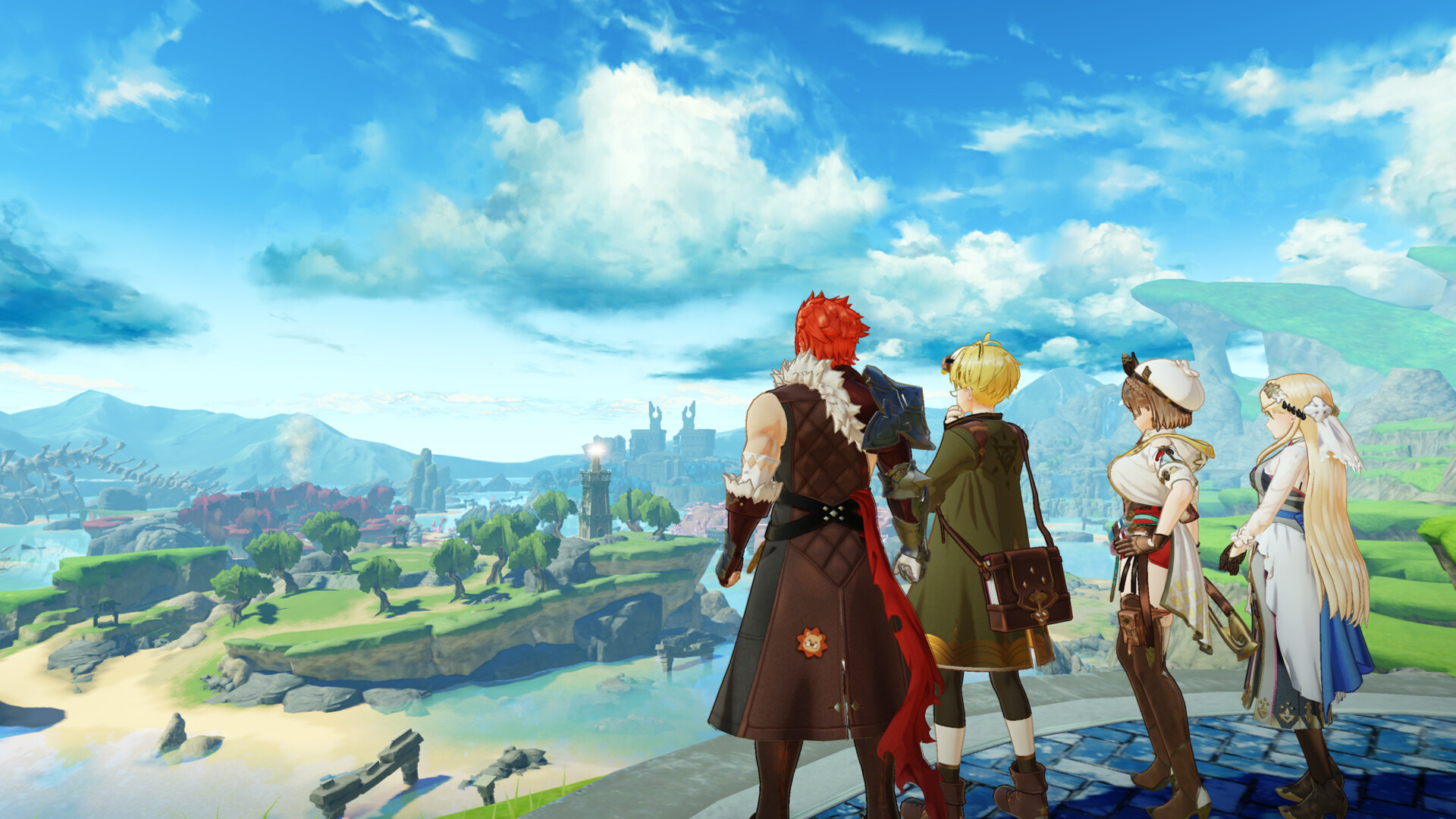
Here at Shacknews, I’ve talked about Atelier a few times. GUST and Koei Tecmo’s item synthesis and cozy vibes RPG series has had a lot of ups and downs over the past few decades. If you’ve read my previous reviews, you might have a skewed perspective, as the most recent outing was a big down, and the one before was, excuse the cliché, a mixed bag.
But dial the clock back just a bit more, and you have the current peak of Atelier mountain: Ryza. This time, we get to talk about Ryza. Banger, banger, banger.
Atelier games typically come in loose trilogies, usually tied together by a theme, a location, or very rarely an actual character. Ryza, which started in 2017 with *Atelier Ryza: Ever Darkness & the Secret Hideout*, ended up being a whole set of direct sequels, a rare move for this series.
That’s because Ryza was such a hit, especially thanks to the debuting Nintendo Switch that year (and a craze for physical copies that were constantly selling out). The series broke containment in a way GUST didn’t seem to be expecting.
You can trace that success not only to how the series evolved in the Ryza trilogy but also to how *Atelier Ryza: Ever Darkness & the Secret Hideout* was such a massive expansion in scope. The follow-up, *Atelier Ryza 2: Lost Legends & the Secret Fairy*, didn’t hit as hard (though it did quite well), which is more a testament to how the Ryza trilogy found a footing and dug in, capturing lightning in a bottle and nourishing it across two sequels in a way few series can—especially in a niche where resources are inherently limited.
It’s a little tough to quantify what’s so great about the Ryza series. A certain sect of the fanbase will say “thighs,” which is valid, I guess, but there’s a lot more to it than that.
Ryza herself is a character with compelling energy in a series where most Atelier protagonists are a little more quaint and low energy. Ryza is a go-getter who accidentally stumbles into alchemy as a side effect of a desperate desire for adventure, and that’s a fun dynamic for a “cozy” game.
Meanwhile, the trilogy itself is an excellent use case for what a trilogy can be from a storytelling perspective. You can *feel* the passage of time—from how these characters’ lives develop, to their relationships with each other, and even the spaces they live in.
It’ll hit differently if you binge the trilogy rather than wait the years between each release, but there’s still an emotional weight when, in the third game, you retrace your steps and join the team in reminiscing about the past.
With how much the gameplay systems change and evolve too, there’s a transformative wonder in how differently you interact with these spaces. It’s like going back home after moving away, mentally tracking how different everything is, and processing the emotions those differences stir.
It’s good stuff, on top of the usual Atelier things such as grinding up numbers, bopping cute enemies with a creative and evolving combat system, and growing from making weak, crappy items to synthesizing a cartoony-ass bomb that could probably level a building.
These are special games, and I’d suggest anyone who is into RPGs but has been unsure about where to start with Atelier to jump in right here. Just be prepared to keep chasing that high for now, as GUST is still figuring that out.
—
### What’s Deluxe about it, then?
Another tradition in the world of Atelier is the DX branding. After a series wraps up, GUST returns to it later with a set of re-releases that make tweaks, add additional content, collect DLC for “free,” and let players snag a whole trilogy for an overall discount.
This was great for collectors too (especially for the growing Switch community at the time), because you could import physical copies of the Dusk and mysterious trilogies, getting a whole set of games on one cart that included English language options and all the additional extras.
Anyway, now it’s Ryza’s turn.
Like before, you can now catch up on the Ryza trilogy if you missed them before, at a lower price point and with additional features such as extra story content, new playable characters, secret bosses, and more.
It’s a great deal, and even a decent deal for Atelier fans willing to double dip.
Especially because in this case, we’re looking at a weird intersection of console generations that happened between the first Ryza and its sequels—and in Nintendo’s case, after as well.
Being a smaller developer in the grand scheme of things, GUST is known for fun, breezy, and beautiful games, but not for fidelity and performance at the top of the line.
But the Ryza DX series came with a unique opportunity, especially for the first game.
—
### FPS dreams, shattered
*Atelier Ryza 1* runs beautifully on the PlayStation 5. Having a classic Atelier game that looks as good as it does and runs smoothly is a wonderful thing, and a great excuse to upgrade from the PS4 version without a doubt.
On the Switch 2, however, you’re looking at a locked 30 frames per second.
The tradeoff, however, is that this thing is not only running with more muscle in the lighting and reflection department than the original Switch version, it’s also clearly running at 1080p in handheld mode and keeping that locked 30 fps without breaking a sweat.
So it looks amazing and doesn’t have those weird jitters the recent *Persona 3 Reload* port suffers from.
But as a game with some hybridized real-time elements in its turn-based combat system, that frame rate over in PlayStation land is looking real good.
And it’s a bummer that there’s no option to choose performance at the expense of some of those visual upgrades, considering the Switch 1 version is playable and runs at a smooth, locked 30 fps on Switch 2 as well.
Performance concerns are less of a factor for Ryza 2 and 3, which were already released for the PS5 and were finicky there to begin with.
For example, the PS5 version of Ryza 2 can run at 60 fps in performance mode, but you had to go into the console UI and manually limit the resolution output yourself to get there.
Having those run at a smooth 30 fps on Switch 2 is a welcome outcome, and expecting 60 there would have been foolish.
Overall, it’s a weirdly fun exercise in going back over history, tracking how things can change across hardware releases, managing your expectations, and finding what to appreciate.
Ryza 1 is the only bummer part, and even then it’s still an improvement.
Hopefully, as time goes on, we can have more stable expectations for Nintendo Switch 2 ports, but as of now, it still feels like the Wild West.
And don’t get me started on the physical aspect; that’s a whole other issue and not as relevant to this review.
—
### Final thoughts
Ultimately, the *Atelier Ryza: Secret Trilogy Deluxe* series is a treat for fans and a brilliant new way for possible newcomers to jump into the best the Atelier series currently has to offer.
It’s a perfect way to try Atelier for the first time, especially since you don’t even have to buy the whole trilogy upfront if you don’t want to.
But it’s an excellent deal between the new content and upgrades, and even if the Switch 2 version isn’t the perfect edition I had in my head, it’s still a great chunk of RPG goodness for the new console.
Regardless of the platform, Ryza’s three-part adventure was a big deal the first time around for real reasons, and the DX version only serves as reinforcement.
*Atelier Ryza: Secret Trilogy Deluxe Pack* is available on November 13, 2025 for PC, PlayStation 4 and 5, Nintendo Switch, and Switch 2.
A Switch 2 code was provided by the publisher for this review.
https://www.shacknews.com/article/146782/atelier-ryza-secret-trilogy-deluxe-review-score