


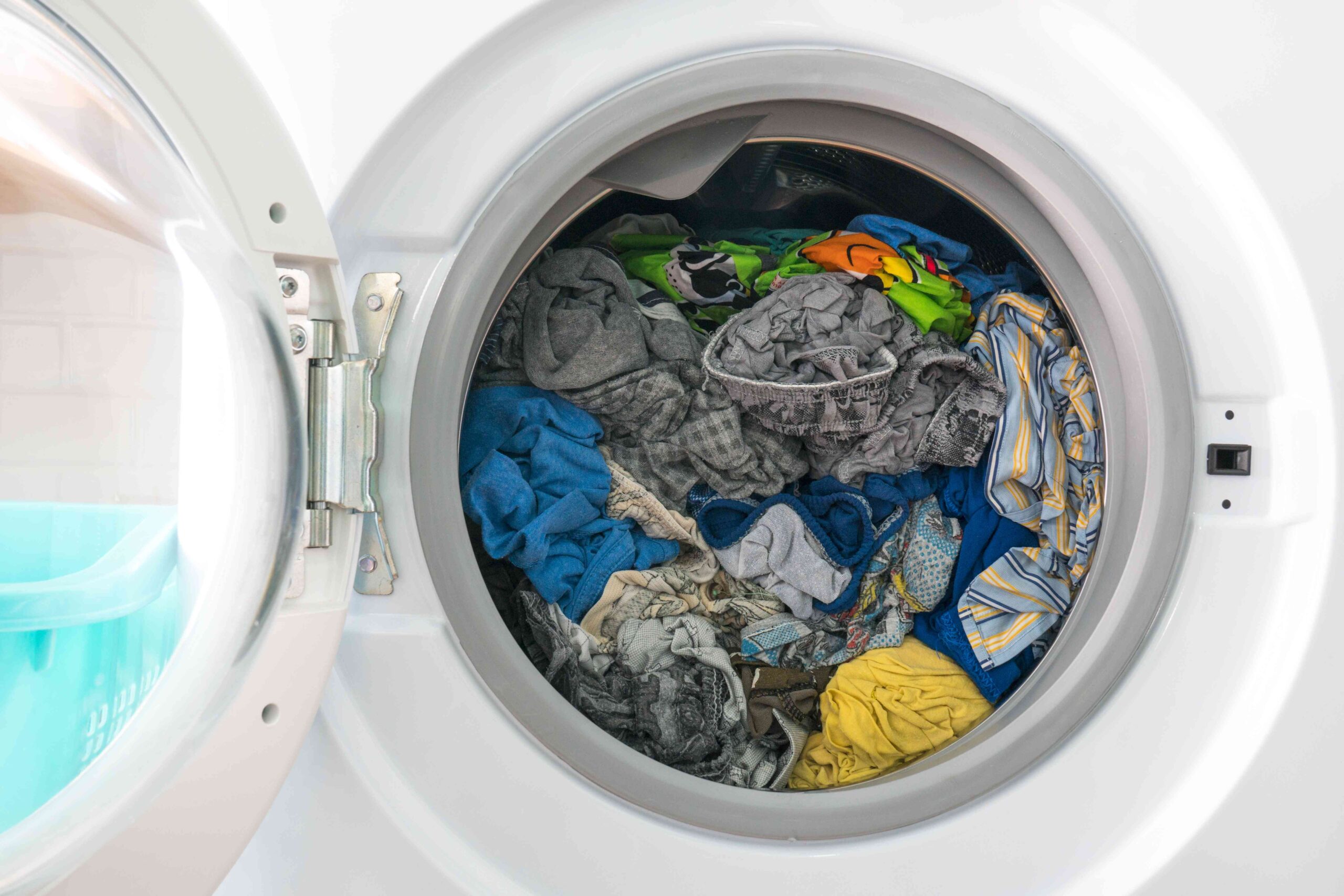
When the laundry basket is piled high, it’s tempting to stuff as much as you can into a load to get it off your floor and out of your headspace. Laundry is the last thing anyone wants to do—the multi-step, never-ending nature of this chore makes it particularly tiring. But just because we’re trying to be efficient doesn’t mean we should overstuff the machine. In fact, chances are that when you learned to do laundry, your parent or caregiver gave you this sage piece of wisdom: **“Don’t overload the machine.”**
No matter your hurry, overloading your washing machine will produce a headache of a different sort (and might even cost you more money). Read on to internalize why stuffing your machines to the brim can cause problems in both the short and long term. Here’s how to keep your laundry moving smoothly while ensuring your machines work their best.
—
## How Do Washers and Dryers Work?
The first step toward understanding why overloading is a no-no is having a clear idea of how these machines actually function.
**Washers** agitate clothes using an electric motor to create motion. That movement, combined with detergent and water, loosens dirt from the surfaces of your clothing. Once the cycle is complete, the dirty water drains away and you’re left with clean, wet clothing.
**Dryers** are equally simple: The drum is turned by an electric motor, and the temperature inside is maintained by a thermostat. As your clothes tumble, water evaporates—voilà! Dry clothes.
—
## Why You Shouldn’t Overload Your Washing Machine
Now that you know how a washer works, it’s easy to see how packing it too full prevents proper agitation. If clothes can’t tumble, they can’t get clean, which means you’re wasting both water and energy—sometimes forcing you to run the washer multiple times.
Closures and accessories like zippers, Velcro, or buttons can also pose a risk when packed tightly together, resulting in unexpected snags or holes. Overloading can even answer the age-old question: “Where did my other sock go?” With too many clothes, smaller items may be forced into the drainage tubes, causing confusion—and possibly an expensive plumber’s bill.
Beyond the damage to your clothes, your washing machine will also sustain more wear and tear if it’s consistently overloaded. A heavy drum strains the electric motor, causing stress faster and ultimately shortening your appliance’s lifespan.
—
## Why You Shouldn’t Overload Your Dryer
The most obvious consequence of an overloaded dryer? Your clothes will still be wet or damp when the cycle ends. Who hasn’t assumed a load was bone dry, only to discover their clothes are still damp—and have now soured, requiring a second wash?
Just like washers, dryer drums need room to tumble the load. Sopping wet clothing or too many items can hinder spinning, put excess strain on the motor, and drastically reduce your dryer’s life.
Additionally, many modern dryers are equipped with sensors to detect dryness and adjust the cycle accordingly. Unfortunately, overloading prevents these sensors from working properly, and regular overloading can even break them altogether.
—
## How Full Is Too Full?
So, how do you know if you’re overloading your laundry machines? Look for these telltale signs:
### Signs of Washer Overload:
– Clothes are sopping wet at the end of a cycle (they should be damp, not soaked)
– Items are still dirty or soiled after washing
– Clothes appear filmy or soapy
– Squealing sounds or intense vibrations during a cycle
### Signs of Dryer Overload:
– Clothes are excessively wrinkled
– There’s a large amount of lint at the end of a cycle
– Loads need more than one drying cycle
—
## How To Avoid Overloading
– Follow your machine’s recommended load sizes (refer to the manual or manufacturer’s guidelines)
– Leave about a hand’s width of space at the top of the machine; this allows clothes to tumble freely
– Sort your laundry by weight and fabric type to avoid dense, uneven loads
– When in doubt, opt for a smaller load—a little empty space goes a long way in keeping your clothes and appliances in top shape
—
Remember: A properly loaded washer or dryer means cleaner, fresher clothing—and less stress on your machines and your own energy. Happy laundering!
https://www.southernliving.com/overloading-washing-machine-11853165