


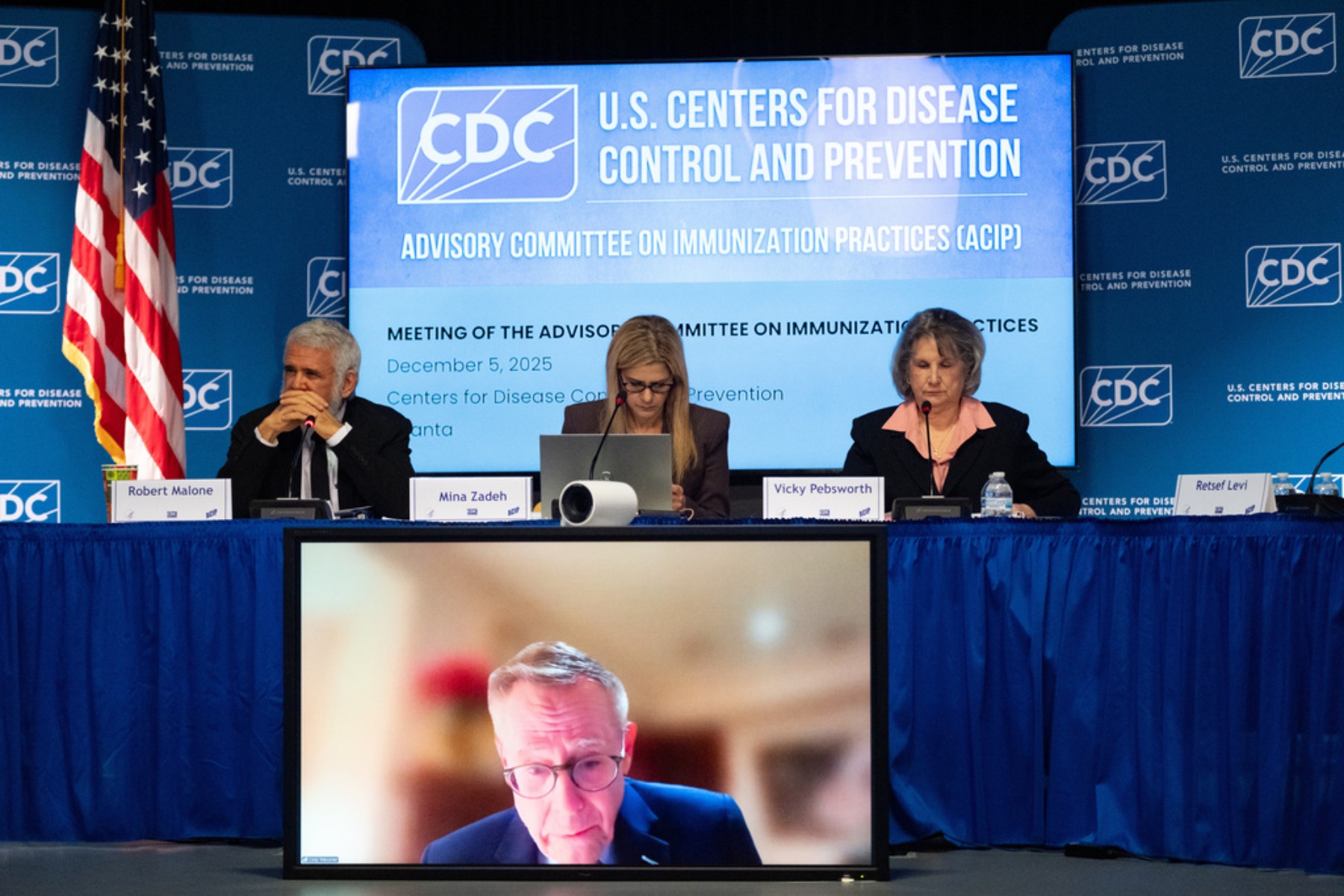
Health leaders are urging Coloradans to rely on trusted national medical organizations and state-based experts for vaccine guidance following a recent meeting of a top national vaccine panel that overturned a longstanding recommendation on hepatitis B immunization for newborns.
The Centers for Disease Control and Prevention’s Advisory Committee on Immunization Practices (ACIP) voted on Friday to revise the agency’s hepatitis B vaccine guidance for newborns. The new recommendation advises administering the hepatitis B vaccine at birth only for infants born to women who test positive for the virus or whose hepatitis B status is unknown. For infants born to mothers who test negative, the guidance suggests a discussion with their doctors about vaccination.
Dr. Rachel Herlihy, Colorado’s state epidemiologist, criticized the change, stating that it is not supported by scientific evidence. She confirmed that the Colorado Department of Public Health and Environment (CDPHE) will maintain its existing policy, which recommends that all newborns receive the hepatitis B vaccine at birth.
“We continue to recommend that all newborns in Colorado receive the hepatitis B vaccine at birth,” Dr. Herlihy said. “That continues to be our recommendation. Nothing has changed that, and that recommendation is grounded in decades of rigorous scientific evidence and a strong safety record associated with the hepatitis B vaccine.”
The ACIP’s new panel was appointed by Health and Human Services Chief Robert F. Kennedy, Jr., a longtime vaccine skeptic, who dismissed the previous 17 members of the committee. The updated guidance still requires approval from the CDC’s acting director.
In a press release, Jim O’Neill, Deputy Secretary of Health and Human Services and CDC Acting Director, stated, “The American people have benefited from the committee’s well-informed, rigorous discussion about the appropriateness of a vaccination in the first few hours of life.”
This shift marks a significant departure from the universal recommendation practiced in the United States for over 30 years, which has contributed to sharply reducing virus-caused liver diseases.
Dr. David Higgins, a pediatrician and assistant professor of pediatrics at the University of Colorado Anschutz Medical Campus, warned against relying on the current ACIP panel for vaccine guidance. “States should not be looking for guidance from this ACIP committee on vaccination and what is best to protect their communities, families, and children,” he said. “They should be looking to experts who are committed to a transparent, rigorous, and evidence-based process of making these really important decisions that affect the health of all of us.”
### Colorado’s Response
The Colorado health department is proactively informing parents, doctors, and nurses that the state’s hepatitis B vaccine guidance remains unchanged. Steps include emergency rulemaking, coordinating insurance coverage, and increasing outreach, education, and awareness efforts to provide clarity and maintain vaccine access for families and healthcare providers.
Governor Jared Polis issued a statement emphasizing Colorado’s commitment to science-based public health guidance:
“Every child and family deserves access to the medications they need. Colorado will continue to follow the science and strongly support the hepatitis B birth dose as a safe, simple, and effective protection for every newborn, even as ACIP creates confusion for families,” Polis said. “We will reinforce the importance of continuing to get the birth-dose, and working to ensure people have access to the best information, that the vaccine remains covered, supporting providers, and partnering through the Governors Public Health Alliance to maintain strong public health protections for every family.”
### Opposition to the Panel’s Decision
Rep. Diana DeGette, a Democrat representing Denver and the Energy and Commerce Health Subcommittee Ranking Member, condemned the federal panel’s decision as “incredibly reckless” and “not supported by science.” She accused the administration of pursuing an “anti-science agenda” that endangers children’s lives and called for a congressional hearing to address RFK Jr.’s role.
National medical groups have echoed these concerns. Dr. Sandra Adamson Fryhofer, a trustee of the American Medical Association, stated, “Today’s action is not based on scientific evidence, disregards data supporting the effectiveness of the hepatitis B vaccine, and creates confusion for parents about how best to protect their newborns.”
Dr. Herlihy expressed concern that the panel’s decision could undermine public confidence and lead to declining vaccination rates for hepatitis B and other diseases. “The concern here is that newer recommendations are being made without rigorous evaluation of the data that exists, and that results in confusion,” she said.
—
### Interview with Dr. David Higgins, Pediatrician at the University of Colorado Anschutz Medical Campus
**John Daley, CPR Health Reporter:** The ACIP meeting has stirred controversy over the hepatitis B vaccine. What’s your take on what’s happening there?
**Dr. David Higgins:** The committee seems more interested in promoting fear than advancing vaccine policy. The scientific record on the hepatitis B vaccine is clear and unequivocal. Tens of millions of newborns have safely received the birth dose, and extensive safety monitoring has never identified credible safety concerns.
Parents should expect expert, evidence-based guidance from federal leaders and advisory bodies like ACIP, operating transparently with safeguards against arbitrary decisions. Unfortunately, this meeting shows ACIP straying from that vital role.
**Daley:** How are these federal developments affecting parents and pediatricians at the local level?
**Higgins:** Most parents won’t watch ACIP meetings, but these decisions trickle down into exam rooms and impact families’ health. I often encounter parents with concerns directly influenced by recent federal guidance. Through empathetic conversations, many parents understand the scientific evidence and choose to vaccinate, but the confusion and chaos created by bodies like ACIP make it harder for families to navigate these critical decisions.
**Daley:** Could you explain the controversy around the hepatitis B vaccine and what the American Academy of Pediatrics (AAP) advises?
**Higgins:** Hepatitis B can cause severe liver damage, cancer, and even death, especially in newborns. The virus is highly transmissible from mother to child at birth. The hepatitis B vaccine is among the most effective tools we have to prevent these outcomes. Giving the first dose within 24 hours of birth is essential for protection.
The U.S. has recommended universal birth dosing for over 30 years with tremendous success. The AAP strongly endorses continuing this practice based on decades of rigorous data and careful evaluation.
**Daley:** What about the broader vaccine schedule? What controversies are being discussed, and what is AAP’s position?
**Higgins:** The childhood vaccine schedule is built on decades of comprehensive research and remains one of the best tools to prevent serious, life-threatening infectious diseases. The timing is carefully chosen based on when children are most vulnerable and how to safely administer vaccines within the healthcare system.
**Daley:** Given the growing divide between the federal panel’s advice and recommendations from medical groups and states, what should states like Colorado do?
**Higgins:** It’s critical that states seek guidance rooted in transparent, rigorous, and evidence-based processes. They should look to trusted experts committed to protecting public health rather than this ACIP committee, which is currently undermining confidence in vaccines.
**Daley:** What practical effects might the federal changes have regarding insurance coverage and vaccine access?
**Higgins:** The recent hepatitis B birth dose decision should not impact insurance coverage or vaccine availability. However, it will sow confusion and doubt among parents, providers, and health systems, potentially disrupting established vaccine delivery processes in hospitals and clinics. This erosion of trust is harmful and unnecessary.
**Daley:** The federal panel emphasizes individual decision-making on vaccines. What message would you like to convey to parents?
**Higgins:** Parents should understand that vaccines like hepatitis B are safe, effective, and critical to protecting their children’s health from serious diseases. While individual choice is important, those choices are best made with clear, science-based information. Misinformation and fear can put children at risk. Parents deserve trustworthy guidance to make informed decisions that safeguard their newborns and families.
—
As Colorado and other states respond to federal shifts in vaccine recommendations, medical experts and public health leaders continue to advocate for evidence-based practices that have protected generations from preventable diseases. It remains essential for families, providers, and policymakers to prioritize science and transparency in immunization decisions.
https://www.cpr.org/2025/12/05/colorado-health-cdc-hepatitis-b-vaccine-changes/